Arcadia Bluffs First-Timer Guide: Wind Math, Tee Honesty, and the No-Hero Script
A practical Arcadia Bluffs first-timer guide built from current official August 19, 2026 course, rates, FAQ, caddie, and hole-guide details. Use these checkpoints to choose the right tee, avoid dumb misses, and enjoy the place without letting the views bully your score.

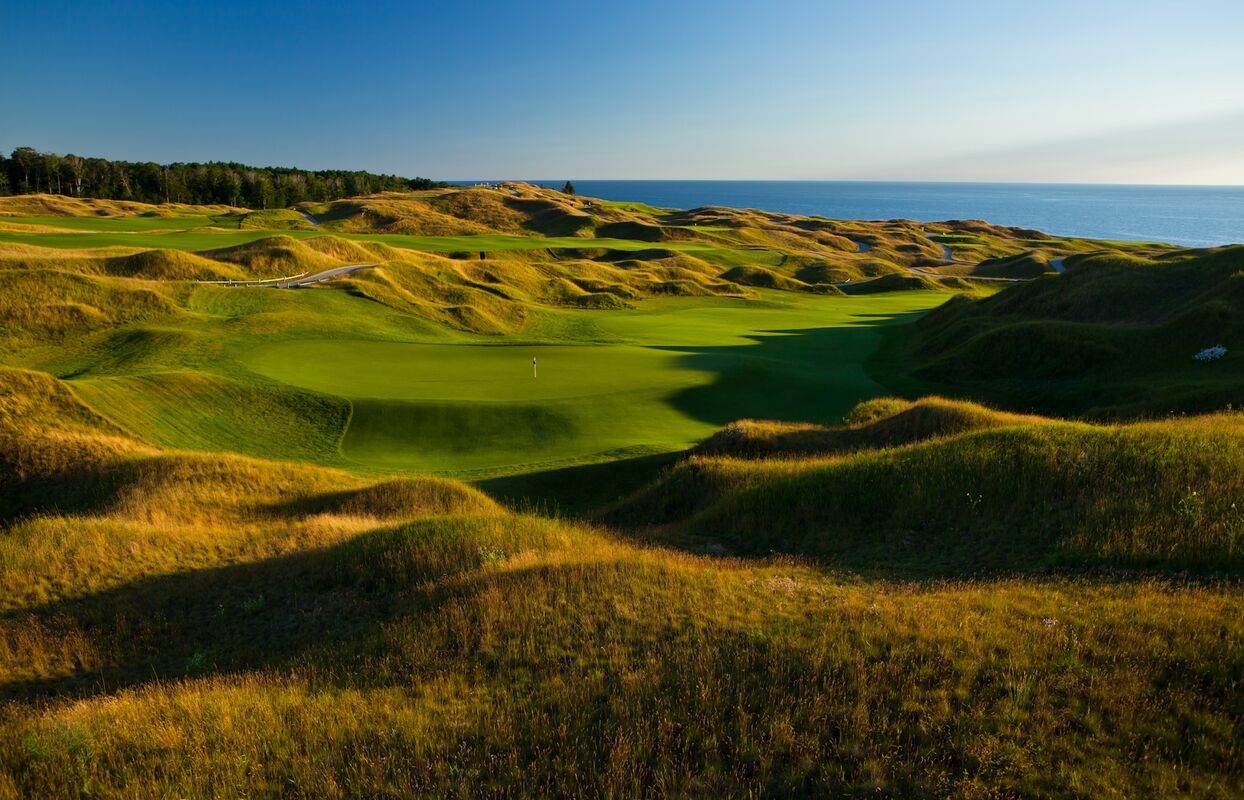
Arcadia Bluffs is the kind of course that convinces golfers to start making emotional decisions before they even hit the first tee shot.
You see Lake Michigan. You see the fescue. You see all that dramatic dune-edge nonsense.
And suddenly you are talking yourself into a more heroic version of your game than the one you actually brought to northern Michigan.
That is how Arcadia starts collecting doubles.
This is not a fake firsthand guide where I pretend I just walked off the property whispering caddie lore into a leather yardage book. This is a practical first-timer guide built from Arcadia Bluffs’ current official Bluffs Course, rates, FAQ, caddie-program, and hole-by-hole pages checked on Wednesday, August 19, 2026.
The question is simple:
If you are playing Arcadia Bluffs for the first time, what do you actually need to know before the visuals start making you stupid?
Quick Answer
For most first-timers, the smart Arcadia script is:
- pick the tee that keeps the day in the fun-hard zone instead of the long-iron survival zone
- use the practice range to find one stock wind number and one knockdown number before the round
- aim away from the heroic miss, especially on exposed approach shots
- treat the downhill lakefront holes like distance-control holes, not swing-harder holes
- and remember that par is a very good score on the exposed one-shotters when Arcadia itself is telling you that
If you want the bigger worth-it verdict first, start with our Arcadia Bluffs review and best golf courses in Michigan. This page is for the golfer who already knows the trip is happening and now wants the cleanest possible first-round script.
The First Thing to Know: This Is a Real Public Round, Not Just a Pretty One
Arcadia’s current official course page says the Bluffs Course is open to the public seven days a week from April through November.
That matters because Arcadia gets talked about like some giant golf postcard first and an actual tee time second.
It is both.
The current official 2026 rates material also says:
- 18-hole rates run from $135 to $195 depending on the timing window
- all rates include a golf cart
- all rates include unlimited use of the practice range
- caddies are available upon request until October
So the first-timer takeaway is pretty straightforward:
show up early enough to use the range you are already paying for, and do not treat the round like a one-minute warm-up before a sightseeing event.
The Money Is Real, So Use the Extras Like an Adult
Arcadia’s current official caddie and FAQ pages checked on August 19, 2026 list:
- walking caddie: $100 per bag plus gratuity
- forecaddie: $100 plus gratuity
- club rental: $100 per bag
- full driving range, short-game area, and putting green access at the Bluffs Course
That does not mean everybody needs a caddie.
It does mean the property is very clearly set up for golfers to take the day seriously instead of winging it and blaming the wind afterward.
My take:
- take a walking caddie if this is the one Arcadia trip you have been building toward and you want the cleanest possible version of the day
- take a forecaddie if your group wants help with lines, yardages, and ball-finding without fully setting money on fire
- skip both only if you are comfortable reading exposed golf and adjusting on the fly when the lake starts messing with your yardages
Tee Honesty Matters More Here Than Most Golfers Admit
Arcadia’s hole pages make one thing very obvious: the course gets expensive when you turn every exposed approach into a masculinity referendum.
The goal on your first lap should not be “play the biggest set that still sounds cool in the group chat.”
The goal should be:
- keep the approach clubs playable
- keep the par-3 yardages sane
- and keep your misses in places where recovery golf is still allowed to exist
My first-timer rule here is simple:
Start one tee shorter than your ego wants, especially if you are not a reliable wind player.
That is an inference from the official hole-yardage pages and the exposed-shot demands, not a direct Arcadia instruction. But it is the inference that saves you from turning the whole day into high-spin 4-hybrids and apologies.
The Four Arcadia Checkpoints I Would Use All Day
1. Find your “add yards” number before the first tee
Arcadia’s own hole pages basically hand you the clue.
On Hole 6, the official caddie tip says to add ten yards to safely carry the front bunker.
On Hole 17, the official caddie tip says to add ten yards for the elevation change and flat-out reminds you that par is an excellent score.
That tells you what kind of place this is.
Before the round, I would hit:
- 5 balls with a stock 8-iron
- 5 balls with a stock 6-iron
- 5 balls with your exposed-hole club, probably 5-iron, hybrid, or 7-wood
And I would write down one number:
How much extra carry do I need today when the shot looks dramatic, downhill, or exposed?
If the answer is usually 8 to 12 yards, own it before the card starts.
2. Respect the layup more than the second-shot fantasy
Arcadia’s official Hole 11 page says the famous downhill par 5 narrows as you get closer to the green, with long fescue on both sides, and tells you to be precise in the layup while considering the rising winds on the downhill approach.
That is not subtle.
So the first-timer plan on longer holes should be:
- get the tee ball into the fairway
- lay up to a wedge number you actually trust
- and stop pretending every downhill look is automatically a go signal
I would rather leave 95 to 115 yards from the fairway than chase some fake heroic second shot and bring rough, slope, and wind into the same argument.
If you need that whole decision tree refreshed first, read when to go for par 5s in two, how to hit fairway woods and hybrids off the deck, and how to hit 3-wood off the tee on tight holes.
3. Use center targets until Arcadia proves you can get cuter
Arcadia’s official Hole 1 caddie tip says to use the sod-wall bunker as a target to position yourself in the center of the fairway.
That is a good first-round philosophy for way more than Hole 1.
On a first visit, I want:
- center of fairway
- center-ish of green
- and the easiest next putt or chip the hole will allow
Arcadia is exposed enough that “I barely missed it” and “I short-sided myself on a hillside” can happen in the same swing.
Do not spend the front nine learning that lesson the expensive way.
4. Take the one-shot holes personally, but not emotionally
The official hole guides make it obvious that Arcadia’s par 3s are where first-timers can start unraveling.
The shot still has to be committed. It just cannot be needy.
Use this rule:
- if the shot is all carry with obvious front trouble, add your confirmed carry cushion
- if the hole is downhill and exposed, club to the true carry number first and let ego complain later
- if the pin is flirting with edge or slope, play the fat half and try to leave a putt, not a recovery speech
That is the same adult golf behind how to play golf in the wind, how to play crosswinds without overcorrecting, and lag putting tips to eliminate three-putts.
My 20-Second Arcadia Routine
On every exposed full shot:
- Check whether the hole is asking for normal carry or add-yard carry.
- Decide whether the smart miss is short-center, long-center, or bail-side.
- Pick the tee-shot or approach target that lets you swing at 75 to 90 percent stress, not 100 percent ego.
- Commit to the shot that keeps the round alive, not the shot that would look coolest in a drone clip.
If you are still between two clubs because the view is messing with your head, the answer is usually the one with enough carry.
The One Practice Block I Would Do Before the Trip
If you get one prep session before Arcadia, do this:
The 15-ball exposed-shot ladder
Hit:
- 5 balls to a 150- to 160-yard target
- 5 balls to a 165- to 180-yard target
- 5 balls with your longest realistic second-shot club
Rules:
- every ball has to finish inside a 35-yard corridor
- at least 10 of 15 must finish pin-high or long-side of the target
- any ball that comes up short of the intended carry line counts as a fail
Why this drill?
Because Arcadia is one of those places where being short is often not “safe.” It is just the polite version of being dead.
Small Thing, But Still Useful: The Bagpiper Is Real
Arcadia’s current FAQ says the bagpiper plays Thursday through Sunday, starting roughly two hours before sunset from Memorial Day through Labor Day, weather permitting.
That has absolutely nothing to do with your score.
It does matter for first-timer expectations.
If your trip lands in that late-summer window, hang around for it. The place is already dramatic, and Arcadia clearly knows it.
Bottom Line
For a first timer, Arcadia Bluffs is not mainly a courage test. It is a discipline test wearing a gorgeous costume.
The current official Arcadia pages checked on Wednesday, August 19, 2026 make the smart version of the day pretty clear:
- public play from April through November
- 18-hole rates ranging from $135 to $195
- golf cart and practice range included
- walking caddie or forecaddie options
- and hole-guide notes that keep screaming the same message: take enough club, respect the wind, and stop trying to win the day with one swing
If you do that, Arcadia becomes what you actually came for:
a huge, memorable, properly difficult Michigan round instead of a very scenic way to talk yourself into dumb doubles.
Image: Arcadia Bluffs
Related Articles