Steel vs Graphite Iron Shafts: Which One Actually Fits Your Swing?
Steel and graphite iron shafts now overlap in weight and performance. Compare feel, vibration, cost, launch, and the fitting process that matters more than material.

Quick Buyer Shortlist
Best places to start
Affiliate links may earn us a commission. Amazon links open search results; verify the model, seller, and current price.
Steel Iron Shafts
Broad range of weights and bend profiles
Graphite Iron Shafts
Available from lightweight through traditional iron-shaft weights
The old version of the steel-versus-graphite debate asked which material was “better.” That is the wrong question in 2026.
Modern steel comes in more weights than the old 120-plus-gram stereotype. Modern graphite reaches weights that overlap traditional steel. Both materials can be stable, accurate, soft-feeling, harsh, high-launching, or low-launching depending on the actual model and how it fits the golfer.
The useful question is:
Which shaft gives you the best combination of strike pattern, launch, dispersion, speed, and feel in the head you plan to play?
For most golfers, neither material wins automatically. A fitting does.
The Short Answer
Choose steel when its weight and feedback help you control the club, the impact sensation does not bother you, and the numbers are at least as good as the graphite alternatives.
Choose graphite when it produces the better strike pattern or speed, when lower total weight helps, or when you prefer less harsh vibration through the hands and arms.
Do not choose graphite solely because of age or steel solely because of handicap. Those shortcuts ignore tempo, strength, delivery, sensitivity to vibration, and the actual shaft profile.
The Weight Categories Now Overlap
It is no longer accurate to describe all steel shafts as heavy and all graphite shafts as light.
Two current manufacturer examples make the point:
| Current shaft family | Material | Published weight examples | What the example proves |
|---|---|---|---|
| True Temper Dynamic Gold 105 | Steel | roughly 103–105 g, depending on flex | Steel is not limited to 120–130 g builds |
| Fujikura AXIOM | Graphite composite | 75, 95, 105, and 125 g families | Graphite is not limited to ultralight builds |
That overlap changes the test. A 105-gram steel shaft and a 105-gram graphite shaft can still feel and perform differently because weight distribution, stiffness, torque, and bend profile differ—but material is no longer a useful proxy for total weight.
What Weight Can Change
Shaft weight affects how the club feels throughout the motion. A lighter build may help a golfer create speed or finish a long session with less effort. A heavier build may make the club easier to locate during transition and help another golfer deliver it more consistently.
The mistake is attaching a guaranteed speed or distance gain to every weight reduction. Ten grams lighter does not automatically create a fixed number of miles per hour or yards. Some golfers swing a lighter club faster; others lose center contact, timing, or face control and gain nothing useful.
Compare these instead:
- average ball speed, not just the single fastest shot
- strike location across at least 8–10 usable swings
- carry-distance consistency
- left-to-right dispersion
- peak height and landing angle
- whether the club still feels controllable late in the session
The best weight is the lightest or heaviest build that produces the complete result—not the one that wins one launch-monitor column.
Feel and Vibration
This is where the material choice can be obvious to the golfer even when the launch numbers are close.
Steel generally transmits impact vibration more directly. Some players like the clear strike feedback. Others experience the same sensation as harshness, especially on cold days or repeated mishits.
Graphite construction can damp some of that unwanted vibration. That does not make every graphite shaft soft or vague, and it does not mean graphite treats an injury. It simply gives a fitter another way to change impact feel while preserving an appropriate weight and profile.
If hand, wrist, or elbow comfort influences your equipment choices, hit both materials and discuss symptoms with a qualified medical professional rather than treating a shaft change as medical care.
Accuracy Is a Fit Result
Neither steel nor graphite owns accuracy.
Dispersion depends on the golfer, clubhead, length, swing weight, shaft weight, stiffness distribution, torque, lie angle, and strike pattern working together. A properly fit graphite shaft can be more accurate than a poorly fit steel shaft, and the reverse is equally true.
This is why stock-label comparisons are weak. Two “stiff” shafts from different families can have different weights and bend profiles. Even within one model family, moving to another weight can change feel enough to alter delivery.
Do not ask the fitter, “Which material is straighter?” Ask, “Which complete build gave me the tightest playable pattern, and can we reproduce its length, lie, swing weight, and grip?”
Launch and Spin
Material does not determine launch by itself. Manufacturers build both steel and graphite options across launch and spin categories.
A golfer who needs more height may reach it through a different shaft profile, less shaft weight, a different iron head, more loft, or some combination. A golfer who launches the ball too high may need a different delivery solution rather than simply switching to steel.
Use the ball flight you need as the target:
- enough peak height and landing angle to hold greens
- a carry window that remains predictable
- spin that is playable with the chosen ball and head
- a trajectory that survives your normal wind conditions
Cost and Durability
Steel is often the lower-cost route, especially in stock iron builds. Premium composite iron shafts can add a substantial upcharge, although exact prices vary by manufacturer, builder, and set makeup.
Both materials should provide a long service life when installed and handled correctly. Graphite deserves an inspection after a sharp impact, visible abrasion, bag damage, or a clubhead/shaft accident. Steel can also bend, rust, or sustain damage. Do not use a visibly compromised shaft of either material.
Before paying to reshaft an existing set, compare the total installed cost—including pulls, shafts, ferrules, grips, labor, loft/lie checks, and swing-weight work—with the cost of ordering a properly fit set.
Who Should Start the Test With Steel?
Steel is a sensible first test if:
- you already deliver a moderate or heavier build consistently
- you prefer direct strike feedback
- a lower equipment cost matters
- your best dispersion comes from feeling more head and shaft weight
- impact vibration is not a concern
That is a starting point, not a rule.
Who Should Start the Test With Graphite?
Graphite is a sensible first test if:
- you want to explore a lighter total build without giving up premium shaft options
- you prefer less harsh impact vibration
- you lose speed or control late in rounds with the current setup
- you need a weight or profile that the available steel matrix does not provide
- your current graphite test produces a better strike pattern or ball flight
Again, this is a starting point—not an age cutoff.
A Simple Fitting Protocol
Bring your current 7-iron and use the same ball throughout the comparison.
- Establish a baseline with your current club.
- Test one steel and one graphite option at a similar weight.
- Test the best material in one lighter or heavier weight.
- Keep the head, length, and loft as controlled as the fitting system allows.
- Hit enough shots to expose the bad pattern, not just the first three swings.
- Compare averages, dispersion, strike location, and subjective comfort.
- Return for a short confirmation session if the winning build is expensive.
If the fitter changes head, length, lie, and shaft simultaneously, ask for a final head-to-head that isolates the shaft choice as much as possible.
My Take
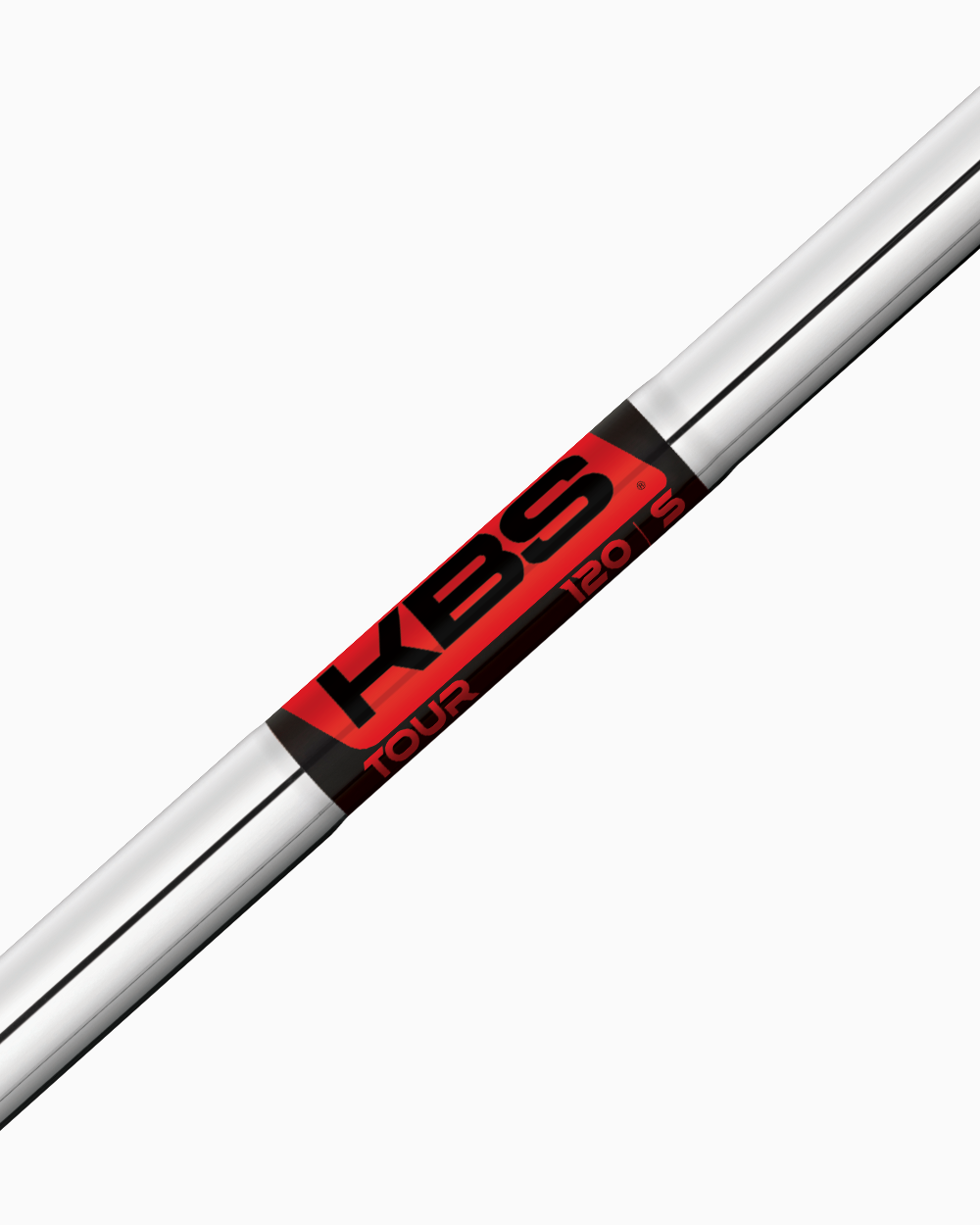
I play steel—KBS Tour 120 stiff—because that heavier feel helps me control trajectory and I like the feedback. That preference does not make steel universally better. I have hit graphite iron shafts on a launch monitor that produced comparable or better numbers.
For the specific shaft choice, read my KBS Tour 120 stiff review. It separates my playing preference from the manufacturer specifications and explains the taper-versus-parallel listing difference.
If I were ordering a set today, graphite would be part of the test matrix without hesitation. But I would not buy it because “graphite won,” and I would not stay in steel because that is what better players are supposed to use.
I would buy the complete build that survives a real fitting.
Bottom Line
The steel-versus-graphite debate is not over because one material defeated the other. It is over because the old stereotypes stopped describing the products.
Test both. Control the variables. Let strike pattern, ball flight, dispersion, and comfort decide.
Related Reading
- Best Irons 2026 — compare the heads before obsessing over the shaft label
- Best Drivers 2026 — our current driver buyer’s guide
- Best Golf Training Aids 2026 — practice tools for the swing you already own
- Stop Blaming Your Driver — equipment cannot replace diagnosis and practice
Related Articles