Best Golf Irons 2026: 7 Sets That Actually Deliver
Quick Buyer Shortlist
Best places to start
Affiliate links may earn us a commission. A direct link opens one verified Amazon product page. A search link opens results. Confirm the model, seller, and current price.
TaylorMade Qi Irons
Callaway Elyte Irons
Titleist T150 Irons
The best golf irons in 2026 for distance, forgiveness, and feel. These seven sets cover high handicappers, mid handicappers, and better players without the marketing fluff.
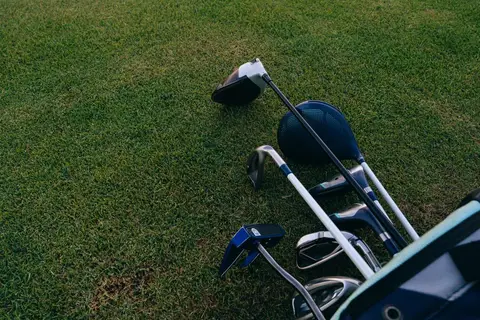
Every year, manufacturers tell us their new irons are “the longest, most forgiving irons we’ve ever made.” And every year, they’re mostly right, which is annoying because it means last year’s irons really were not the pinnacle they claimed.
But 2026 is legitimately a strong iron year. The face tech is better, the forgiveness-to-feel balance is better, and the category splits are clearer than usual. This guide is built from current manufacturer specs and the Birdie Report iron cluster already in the repo, so you can move from the main roundup into the exact review or comparison page that matches your shortlist. It does not add launch-monitor or on-course test numbers.
If you want to see whether a set’s lofts leave a hole before you order, run one carry you already know through the golf club gapping calculator.
Quick Picks
| Category | Winner | Price |
|---|---|---|
| Best Overall | TaylorMade Qi | Check current price |
| Best Feel | Mizuno JPX925 Hot Metal | $899 |
| Best for High Handicaps | Ping G440 | $999 |
| Best Player’s Iron | Titleist T150 | $1,199 |
| Best Value | Cobra Darkspeed | $799 |
| Best Distance | Callaway Elyte | $999 |
| Sleeper Pick | Srixon ZX5 Mk III | $899 |
1. TaylorMade Qi — Best Overall
Price: Check current price | Category: Game improvement | Rating: 9.4/10
This pick is the Qi iron, not a Qi35 iron. TaylorMade uses Qi35 for the 2025 driver, fairway, and hybrid family. The iron details are on TaylorMade’s Qi irons page.
TaylorMade describes Cap Back Design, a Speed Pocket, and FLTD CG, with the center of gravity lowest in the long irons and higher in the scoring clubs. Its own comparison chart rates the Qi high for forgiveness and trajectory, longest in that TaylorMade distance column, and low for workability. The published 7-iron is 28.0° and the pitching wedge is 43.0°. Those are spec facts, not a measured carry or an MOI ranking against other brands.
The downside? TaylorMade rates workability low. Golfers who want to shape the ball should compare the P·790 or P·770 on that same chart, or the separate Qi HL and 2026 Qi Max irons, instead of assuming this head does every job. Confirm wedge gaps before you order.
If you want a deeper dive on the broad-appeal distance category, check out our full TaylorMade Qi irons review, the new Mizuno JPX925 Hot Metal vs TaylorMade Qi irons page, the new TaylorMade Qi vs PING G740 irons fork if your real question is broad TaylorMade help versus Ping’s full maximum-help safety net, the new Mizuno JPX925 Forged irons review, the new TaylorMade P790 irons review, the new Titleist T200 irons review, and the more specific TaylorMade P790 vs Titleist T200 irons decision page.
2. Mizuno JPX925 Hot Metal — Best Feel
Handicap Range: 8-30 | Rating: 9.2/10
There’s a reason Mizuno has a cult following, and it’s not because of clever marketing. It’s because their irons feel like nothing else on the market. The JPX925 Hot Metal continues that tradition while adding enough modern tech to keep up with the distance wars.
The Chromoly face is hot — like, noticeably hot. Mishits that should’ve come up 10 yards short were landing on the green. But unlike some game improvement irons that feel like hitting a trampoline, the JPX925 still gives you actual feedback. You know where you hit it on the face, which helps you improve instead of just masking your mistakes.
The turf interaction is elite too. The sole cuts through everything — tight lies, fluffy rough, even hardpan. Mizuno just understands how irons are supposed to work.
Who shouldn’t buy these: If you’re a total beginner who needs maximum forgiveness above all else, the Ping G440s are more forgiving. But if you care about feel at all, Mizuno is the answer.
If your actual debate is Mizuno’s hotter distance lane versus TaylorMade’s safer all-around forgiveness case, read Mizuno JPX925 Hot Metal vs TaylorMade Qi irons before you buy.
3. Ping G440 — Best for High Handicaps
Handicap Range: 12-36 | Rating: 9.1/10
Ping has been making the most forgiving irons on the planet for decades, and the G440 is the latest iteration of “we dare you to hit a bad shot with these.” The face flexes like crazy, the perimeter weighting is maxed out, and the result is an iron that keeps your misses in play even when your swing is a mess.
The technology gap between older GI irons and the current G440 is real, and that is why this page keeps surfacing in high-handicapper shortlists. If you need the most protection on low-face and heel-toe misses, Ping still has the strongest case.
The ball flight is high and lands soft, which is exactly what higher handicappers need because they’re generally not generating enough spin to stop the ball with their swing alone. Let the club do the work.
The tradeoff: These are chunky. The topline is thick, the offset is pronounced, and better players will probably think they look like shovels. But if your ego can handle it, these will shave strokes.
If your actual fork is forgiveness versus a little more ball-speed pop, read Ping G440 vs Mizuno JPX925 Hot Metal irons before you buy. If your debate is really “standard GI help versus maximum Ping help,” use Ping G440 vs Ping G740 irons. If your next fork is whether maximum-help Ping still beats the cleaner premium step, use Ping G440 vs Ping G740 Irons (including PING G740 vs Titleist T200 Irons and PING G740 vs TaylorMade P790 Irons), and the new TaylorMade Qi vs PING G740 irons page.
4. Titleist T150 — Best Player’s Iron
Handicap Range: 0-12 | Rating: 9.3/10
Titleist doesn’t try to make the longest irons or the most forgiving irons. They make irons for people who actually know how to hit the ball, and the T150 is the sweet spot of their lineup — enough forgiveness that it’s not a blade, enough workability that you can actually shape shots.
The compact head, thin topline, and minimal offset look incredible at address. It’s the kind of iron that makes you want to pure it, which — weirdly — might make you actually pure it more often. Confidence matters in this game.
The flight is controlled, the spin is consistent, and the misses are predictable. Slight miss? Slight penalty. Not the game-improvement forgiveness TaylorMade builds into the Qi, but a smaller miss that still asks you to find the center.
Be honest with yourself: If you’re not consistently breaking 85, these probably aren’t for you. The Titleist T200 review is the better Titleist read for mid-handicappers. But if you can handle a player’s iron, few things feel better than a well-struck T150.
5. Cobra Darkspeed — Best Value
Handicap Range: 8-25 | Rating: 8.9/10
Cobra remains the most underrated brand in golf, and the Darkspeed irons are $200 cheaper than most of their competitors while delivering 90% of the performance. If you’re not emotionally attached to a brand name, these are the smart money play.
The PWRSHELL face insert generates serious ball speed, and the 3D-printed weight pads let Cobra optimize the CG position in ways traditional manufacturing can’t. The result is an iron that launches high, goes far, and forgives your mistakes — for $200 less than you’d pay anyone else for the same experience.
I’ll be honest: they don’t feel as buttery as the Mizunos, and they’re not quite as forgiving as the Pings. But at $799 for a full set? You’re getting an absurd amount of performance per dollar.
If you’re building a complete bag on a budget, check out our budget golf setup under $500 guide.
6. Callaway Elyte — Best Distance
Handicap Range: 5-20 | Rating: 9.0/10
If your main goal is to hit the ball farther with your irons, the Callaway Elyte is the answer. The AI-designed Flash Face is one of the clearest ball-speed stories in the category, and current testing coverage consistently puts Elyte near the top of the mainstream distance conversation.
The catch? Strong lofts. Your 7-iron is basically a traditional 6-iron, so don’t go flexing on your buddies about your distances without checking the numbers. But even accounting for loft differences, the Elyte still picks up a few yards over the competition thanks to the face tech.
The look is clean — Callaway has shed the chunky game-improvement aesthetic of a few years ago. These look like a serious player’s club with game-improvement guts.
If Elyte is on your list, start with the full Callaway Elyte irons review, the more specific Callaway Elyte vs Srixon ZXi5 irons comparison, the new Callaway Elyte vs Mizuno JPX925 Forged irons fork if you are debating broad help versus premium feel, and the higher-handicapper page in Callaway Elyte vs Ping G740 irons.
7. Srixon ZX5 Mk III — Sleeper Pick
Handicap Range: 5-18 | Rating: 9.0/10
Nobody talks about Srixon irons, and that’s a crime. The ZX5 Mk III is one of the best player’s distance irons on the market — it’s forgiving enough for a 15-handicap but refined enough that a scratch player could game it without feeling embarrassed.
The HT1770 steel face is thinner than most competitors, which translates to more ball speed and a more satisfying feel at impact. The sole is narrow enough to handle tight lies but wide enough to keep you from digging. It’s the Goldilocks iron.
Brooks Koepka plays Srixon. Hideki Matsuyama plays Srixon. Shane Lowry plays Srixon. Maybe there’s something to it.
How to Choose the Right Irons
Here’s the brutal truth: get fitted. An article on the internet can point you in the right direction, but the right shaft, lie angle, and loft configuration for YOUR swing is something only a fitter can figure out.
That said, here’s my general framework:
- Shoot 95+: Go maximum forgiveness — Ping G440 or Cobra Darkspeed
- Shoot 85-95: The sweet spot — TaylorMade Qi irons, Mizuno JPX925, or Callaway Elyte
- Shoot under 85: Player’s irons — Titleist T150 or Srixon ZX5 Mk III
- On a budget: Cobra Darkspeed, no question
And don’t sleep on last year’s models. A set of 2025 irons at 30-40% off will outperform brand-new budget irons every time. Check our best golf deals for March for current markdowns.
Final Thoughts
There has rarely been a better time to buy irons. The technology is good, the forgiveness ceiling is high, and the differences between categories are clearer than the marketing usually admits.
For the average golfer comparing TaylorMade’s game-improvement iron, the Qi is the model to shortlist. It is not a tested “safest in golf” ranking, and it is not a Qi35 iron. For the golfer who needs maximum help, it is hard to beat the Ping G440. For the golfer who wants more speed without drifting into a super-GI look, the Callaway Elyte stays one of the strongest mainstream options.
If your shortlist is already down to two or three sets, use the deeper cluster pages next: Best Irons for High Handicappers 2026, Best Irons for Mid Handicappers 2026, the new TaylorMade P790 irons review, the new Titleist T200 irons review, Callaway Elyte irons review, Srixon ZXi5 irons review, Mizuno JPX925 Forged irons review, TaylorMade P790 vs Titleist T200 irons, the new TaylorMade Qi vs PING G740 irons, Callaway Elyte vs Mizuno JPX925 Forged irons, TaylorMade Qi vs Srixon ZXi5 irons, Mizuno JPX925 Hot Metal vs TaylorMade Qi irons, Srixon ZXi5 vs Mizuno JPX925 Forged irons (including TaylorMade Qi vs Mizuno JPX925 Forged Irons), the new Mizuno JPX925 Forged vs Ping G440 irons, Ping G440 vs Ping G740 irons (including PING G740 vs Titleist T200 Irons and PING G740 vs TaylorMade P790 Irons), Callaway Elyte vs Ping G740 irons, and Ping G440 vs Srixon ZXi5 irons.
Now go get fitted. The best irons in the world still will not help much if the specs are wrong.
Where to Buy
Current retailer options
Affiliate links may earn us a commission. A direct link opens one verified Amazon product page. A search link opens results. Confirm the model, seller, and current price.
TaylorMade Qi Irons
Callaway Elyte Irons
Titleist T150 Irons
Ping G440 Irons
Cobra Darkspeed Irons
Mizuno JPX925 Hot Metal Irons
Srixon ZX5 Mk III Irons
Related Articles