
Fairway Finder: The 3-Club Tee Shot Plan That Keeps Doubles Off Your Card
Most golfers don't need a better swing on the tee. They need a smarter plan. Here's the 3-club system, target-width math, and practice drills that keep tee shots in play.

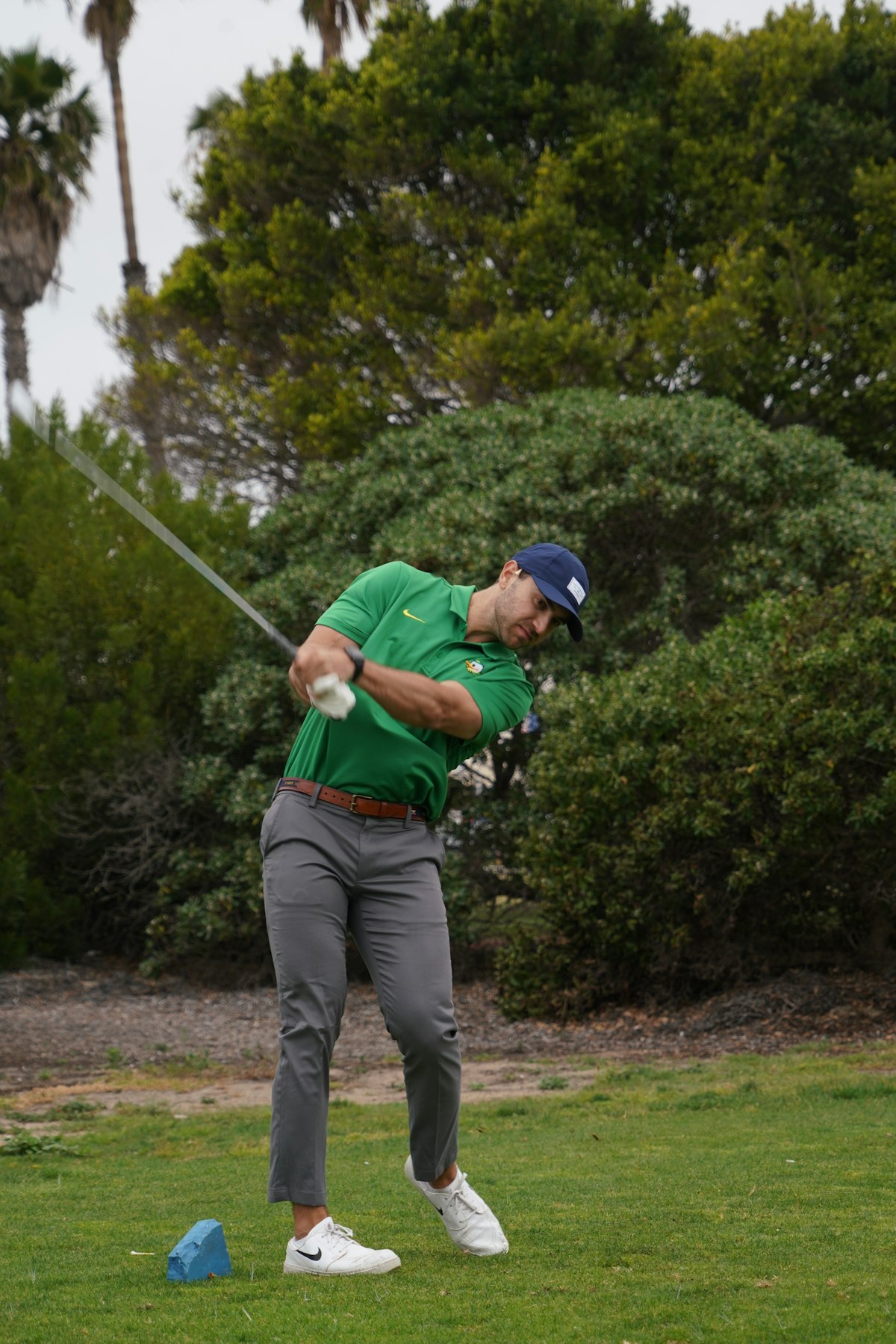
Most golfers think their tee-shot problem is technical.
Sometimes it is. A lot of the time, though, the real issue is that they keep pulling driver on holes that are very clearly asking for a different answer.
That is how a perfectly normal 84 turns into a 91. Not because you cannot swing. Because you keep choosing the loudest club instead of the smartest one.
So here is the fix: build a 3-club tee-shot plan before the round, then use target-width checkpoints so you stop talking yourself into dumb decisions.
The 3 Clubs You Actually Need Off the Tee
Your tee-shot plan should have three options:
- Green light club: usually driver. This is for wide holes where distance actually matters.
- Fairway finder club: usually 3-wood, 5-wood, hybrid, or driving iron. This is your “keep the round alive” club.
- Emergency club: usually hybrid or long iron. This is for narrow holes, penalty-heavy holes, or the moment your driver starts acting possessed.
If your bag does not have a true fairway finder club, that is a problem worth solving before you buy another driver. A club you hit 215-230 and can keep in play is more valuable than 10 extra yards and a second reload.
The Target-Width Rule
This is the checkpoint that decides whether driver stays in the bag.
On any hole, estimate the usable landing area width at your normal carry distance. Then compare that to your real shot pattern, not your favorite one.
Use these rules:
- 40+ yards wide: driver is usually fine
- 30-40 yards wide: yellow light, only hit driver if trouble is mild on one side
- Under 30 yards wide: fairway finder time
- Under 25 yards wide with penalty trouble: emergency club, no debate
That is the whole game. If your driver pattern is roughly 55 yards wide and the landing zone is 28 yards wide, you do not “need confidence.” You need a different club.
Know Three Numbers, Not Fifteen
You do not need a TrackMan dissertation on the first tee. You need three honest numbers:
- Carry distance
- Total distance
- Shot-pattern width
Example:
- Driver: 245 carry, 262 total, 52-yard pattern
- 5-wood: 220 carry, 232 total, 34-yard pattern
- 4-hybrid: 205 carry, 215 total, 26-yard pattern
Now the decision gets simple. A hole with bunkers pinching the fairway at 240 and OB right does not care that your driver went 278 one time in August. It cares what your normal pattern looks like.
This is the same blunt math behind better course management. Golf gets easier when you stop pretending your best shot is your average shot.
If the hole gives you two routes instead of one, take this thinking straight into how to play split-fairway tee shots without picking the dumb side. Split fairways are where “smart club” and “smart route” finally have to work together.
The Tee-Box Checklist
Before every non-obvious tee shot, ask these four questions:
- How wide is the landing area at my carry number?
- What is the scorecard-killing miss here: penalty, punch-out, or just rough?
- Do I actually gain anything by hitting driver?
- What club leaves the easiest next shot from the widest part of the hole?
If driver only turns a 155-yard approach into a 132-yard approach, but brings water and trees into play, that is fake aggression. Hit the fairway finder and go play golf.
Once you make the club choice, stop lingering. A cleaner pre-shot routine matters here because a smart tee-shot plan still falls apart if you stand over the ball long enough to talk yourself into a steer-job swing.
Build Your Hole Buckets
The easiest way to stay disciplined is to classify tee shots before the round.
Green-Light Holes
Driver all day.
These are holes with:
- generous landing areas
- light rough instead of penalty trouble
- a real reward for being 20-25 yards farther up
You should swing freely here. This is where you cash in.
Yellow-Light Holes
This is where most doubles are born.
The hole looks hittable with driver, but there is enough junk near the landing area that a normal miss turns into stress. On these holes, you need one deciding factor:
- if your miss still leaves a clean shot, driver is okay
- if your miss brings trees, fairway bunkers, or a half-punch into play, hit the fairway finder
Yellow-light holes are where ego starts negotiating. Do not negotiate with ego.
Red-Light Holes
Penalty trouble. Narrow landing area. Forced carry plus trouble on both sides. Dogleg that kills the long ball. This is not where you prove anything.
Take the club that keeps the ball in front of you and make an easy bogey at worst. Most of the time you will still make par because your second shot is from grass instead of chaos.
If your goal is to break 90 for real, red-light tee shots are not scoring opportunities. They are survival tests.
The Fairway Finder Is Not a “Choke Club”
This part matters. A lot of golfers grab 5-wood off the tee like they are apologizing for it.
That is backwards.
Your fairway finder is a scoring tool. If you stripe a 5-wood 225 into the short grass and hit wedge on, that is smart golf. Nobody hands out style points for carving driver into the trees and inventing a recovery shot.
If anything, the fairway finder should get a more committed swing than driver because the job is cleaner:
- pick the fat side
- make your normal move
- take the boring result
Boring golf is expensive to your playing partners and great for your handicap.
The 12-Ball Tee Shot Test
Here is the practice session that tells you what your actual pecking order should be.
Bring driver, your fairway finder, and your emergency club to the range.
Hit:
- 4 drives at a fairway target
- 4 fairway-finder shots at the same target
- 4 emergency-club shots at the same target
Track three things:
- how many finish inside a 35-yard fairway
- how many are immediate disasters
- your average front-to-back distance
If your 5-wood keeps 3 of 4 in the fairway and your driver keeps 1 of 4 in play, I do not care which club goes farther. The answer is staring at you.
Pair that with purposeful practice instead of just emptying a bucket and hoping the truth shows up by accident.
The Two-Tee Gate Drill
This is the range drill that cleans up tee-shot discipline fast.
- Put two tees in the ground 25-30 yards apart at your target line.
- Pick the club for the shot.
- Hit 10 balls trying to start every one through the gate.
- Score it.
Scoring:
- 2 points = through the gate
- 1 point = playable miss
- 0 points = penalty-ball miss
Benchmarks:
- 16-20: club is reliable
- 11-15: usable, but only on green-light or mild yellow-light holes
- 10 or less: not a pressure option right now
That last number is important because too many golfers choose tee-shot clubs based on vibes instead of evidence.
What to Do When Driver Is Cold Mid-Round
You do not need a swing intervention on the 8th tee. You need a smaller blast radius.
If driver produces two bad misses in three holes, make this temporary switch:
- green-light holes become yellow-light holes
- yellow-light holes become fairway-finder holes
- red-light holes become emergency-club holes
That is it. No mechanical overhaul. No desperate “one good one” swings. Just change the club and keep the card alive.
This is the same grown-up mindset behind bouncing back after a bad hole. Damage control is a skill.
What Good Tee-Shot Strategy Looks Like on the Card
Here is the goal for your next five rounds:
- 0 reloads
- 0 hero tee shots on red-light holes
- at least 80% commitment to the club you chose
- fewer than 2 penalty strokes total from tee shots
You do not need to hit every fairway. You need to remove the stupid doubles.
That is why this works. A 240-yard drive into the trees is not better than a 220-yard 5-wood in the fairway just because the first one looked cooler for half a second.
Bottom Line
If you want lower scores, stop asking “Can I hit driver here?”
Ask:
- how wide is the landing zone
- what miss can I afford
- what club keeps the next shot simple
Build your three-club plan. Use the target-width rule. Practice the gate drill. And when the hole says “not driver,” listen the first time.
That alone can save you 3-4 shots a round without changing a single thing about your swing.
Image: Unsplash
Related Articles