Stop Wasting Time at the Range: How to Practice Golf With Purpose
Most golfers beat balls at the range and wonder why they don't improve. Here's how to structure practice sessions that actually translate to lower scores.
 Kyle Reierson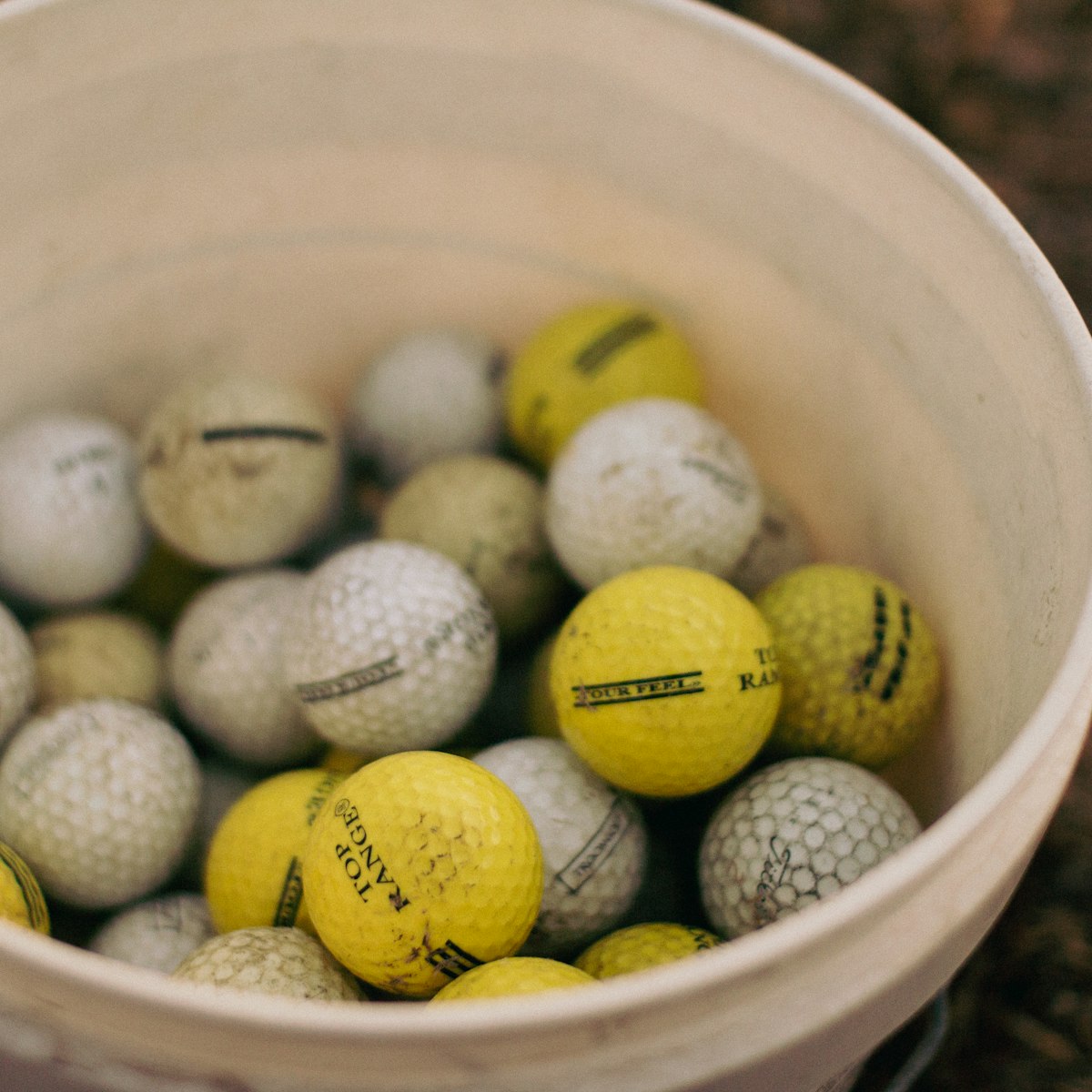
Here’s a question that’ll sting a little: how many range sessions have you had in the last year where you showed up with an actual plan?
Not “I’m gonna work on my driver.” An actual, structured plan with specific goals, measurable outcomes, and a time limit.
If you’re like 90% of golfers, the answer is zero. You grab a large bucket, set up next to the guy ripping driver, and proceed to hit 85 seven-irons at roughly the same target while scrolling your phone between shots. Then you wonder why your handicap hasn’t moved in three years.
The dirty secret of golf improvement is that how you practice matters infinitely more than how much you practice. A focused 45-minute session will do more for your game than three hours of mindless ball-beating. And the data backs this up — studies on skill acquisition consistently show that deliberate practice (structured, goal-oriented, with feedback) produces 2-5x faster improvement than unstructured repetition.
Let’s fix your range sessions.
The 60/30/10 Rule
Here’s the framework that actually works. Split every practice session into three blocks:
- 60% — Weaknesses. Whatever’s costing you the most strokes right now. Not what’s fun to hit. What you suck at.
- 30% — Scoring shots. Wedges inside 100 yards, putting, chipping. The shots that actually determine your score.
- 10% — Confidence shots. Hit whatever makes you feel good. This is your reward.
For a one-hour session, that’s 36 minutes of grinding, 18 minutes of short game work, and 6 minutes of ego boosting.
Most golfers do the exact opposite — 80% confidence shots, 20% whatever, 0% actual weakness work. That’s not practice. That’s entertainment.
The “Play the Course” Drill
This is the single best range drill that exists, and almost nobody does it.
Pick a course you know well. Play it hole by hole at the range:
- Hole 1: Hit your actual tee shot. Aim at a specific target the right distance away.
- Based on where that lands, hit your approach shot to a target that represents the green.
- Move to the next hole. Different club, different target, different shot shape.
Why this works:
- You never hit the same club twice in a row (just like on the course)
- Every shot has consequences and context
- You practice visualization and commitment
- You get 18 “first shots” with each club instead of grooves
After 18 holes, you’ve hit maybe 36 balls total. That small bucket suddenly feels like a full round. And every single swing had intention behind it.
Stop Hitting the Same Club 20 Times in a Row
This is the biggest range mistake in golf. You hit a bad seven-iron, so you tee up another one. And another. By the fifth ball, you’re striping it. You feel great. You’ve learned nothing.
Here’s why: on the course, you never get a second chance at the same shot. You hit one seven-iron, then a wedge, then a putt, then a driver. Your brain has to recall the swing pattern cold every single time.
Blocked practice (same club over and over) builds temporary comfort. Random practice (switching clubs constantly) builds permanent skill.
Research from motor learning science calls this “contextual interference.” It feels harder during practice — your sessions will feel less satisfying. But it transfers to the course at roughly 2x the rate of blocked practice.
Force yourself to switch clubs every 2-3 balls maximum. It’ll feel terrible. Your scores will thank you.
The 10-Ball Challenge
Before you leave the range, do this every single time:
- Pick 10 specific shots — different clubs, different targets, different trajectories
- Write them down (yes, actually write them down)
- Hit each one once. No mulligans.
- Score yourself: inside target = 2 points, on the green = 1 point, miss = 0
- Track your score over time
A good golfer scores 12-14 out of 20. A scratch player scores 16+. Most people starting out score 6-8 and are genuinely shocked.
This drill is brutal because it eliminates the comfort of repetition. It’s also the closest thing to actual golf pressure you can create at the range.
Your Short Game Practice Is Probably Backwards
Most golfers practice putting by dropping three balls and hitting the same putt over and over. Again — blocked practice. Feels good, teaches little.
Instead, try the 9-Ball Putting Game:
- Place three balls at 3 feet, three at 6 feet, three at 15 feet
- Putt each ball once, rotating distances: 3-foot, 6-foot, 15-foot, repeat
- Score: 3-footers must go in (1 point each). 6-footers inside the cup = 2 points. 15-footers inside 3 feet = 1 point.
- Max score: 12. Par is 8.
For chipping, the landing spot drill is king. Pick a spot on the green where you want the ball to land (not where you want it to finish). Place a towel there. Every chip should hit the towel. Once you control your landing spot, distance control happens automatically.
The Pre-Practice Checklist
Before you hit a single ball, answer these four questions:
- What’s my #1 weakness right now? (Be specific. Not “irons.” More like “I’m hitting my 6-iron fat on downhill lies.”)
- What’s my goal for this session? (Measurable. “Hit 7 out of 10 wedges inside 20 feet.”)
- How long am I staying? (Set a timer. When it goes off, leave. Fatigue kills quality.)
- What’s my warm-up? (Start with half-swings and short irons. Always. Your body isn’t ready for driver bombs on ball one.)
Write this on your phone’s notes app. It takes 30 seconds and it’ll double the value of every session.
Track Something — Anything
You can’t improve what you don’t measure. Pick one metric and track it over 10 sessions:
- Fairway percentage in the play-the-course drill
- 10-Ball Challenge score
- Putting game score
- Percentage of wedges inside 15 feet
A simple spreadsheet or notes app works fine. You don’t need fancy shot trackers (though they help). The act of writing it down forces accountability.
After 10 sessions, you’ll see patterns. Maybe your wedge accuracy improves but your driving doesn’t. Now you know where to spend more time. That’s data-driven practice, and it’s how every tour player approaches improvement.
The One-Hour Session Template
If you’ve got 60 minutes, here’s exactly what to do:
0-5 min: Half-swing wedges. Loosen up. No target pressure.
5-20 min: Weakness work. Whatever’s costing you strokes. Use random practice — switch targets and clubs every 2-3 balls.
20-35 min: Scoring zone. Wedges from 40-100 yards to specific targets. Track your proximity.
35-50 min: Play the course drill. 9 or 18 holes.
50-55 min: 10-Ball Challenge. Record your score.
55-60 min: Hit 5 drivers at specific targets. End on a good note.
That’s it. No three-hour marathon. No 200-ball buckets. Just focused, intentional work that respects your time and actually makes you better.
The Hard Truth
The golfers who improve fastest aren’t the ones who practice the most. They’re the ones who practice with intention and a plan. They show up knowing what they’re working on, they measure their results, and they leave when the quality drops.
If you’ve been stuck at the same handicap for years, the answer probably isn’t more lessons or a new driver. It’s practicing like you actually want to get better instead of just killing time before your tee time.
Now go buy a small bucket instead of a large one. Your game will thank you.
Weekly Golf Newsletter
Equipment reviews, tips to lower your scores, and exclusive deals delivered every Tuesday.
No spam. Unsubscribe anytime. 100% free.
Related Articles