Blade vs Mallet Putters: Which Style is Right for You?
The great putter debate — blade or mallet? We break down the pros, cons, and who each style actually benefits most.

Walk into any golf shop and you’ll see the putting green divided into two camps: the blade purists who think their Scotty Cameron makes them the next Tiger Woods, and the mallet loyalists who wouldn’t trade their Spider for anything.
Both sides think they’re right. Both sides are wrong. And right. It’s complicated.
Let’s figure out which putter style actually suits your game, because I guarantee most of you are putting with the wrong type.
What’s the Actual Difference?
Before we get into the weeds, let’s define terms:
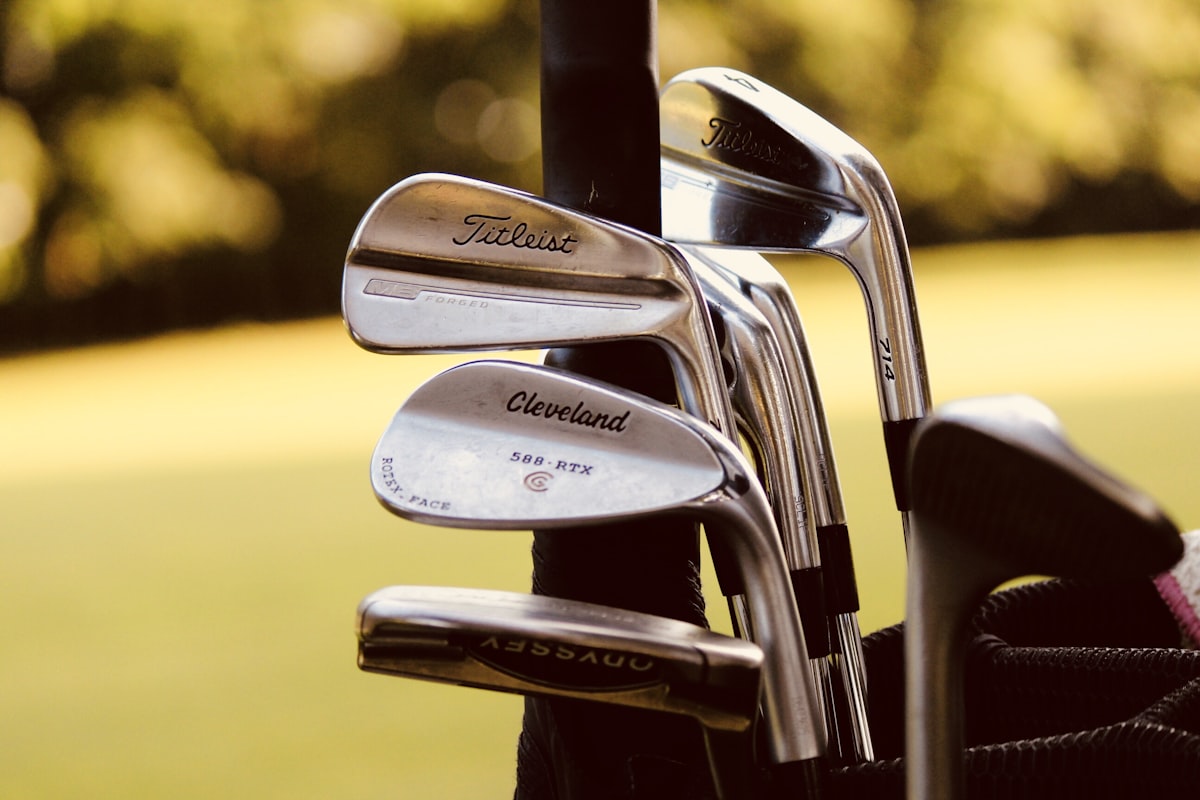
Blade putters are the traditional, compact design. Think Scotty Cameron Newport, Ping Anser, Odyssey #1. They’re smaller, lighter, and have been the dominant putter style for decades. Low MOI (moment of inertia), meaning they twist more on off-center hits.
Mallet putters are larger, often with elaborate alignment aids and weight distributed around the perimeter. Think TaylorMade Spider, Odyssey 2-Ball, Ping Sigma. High MOI, meaning they resist twisting and maintain speed better on mishits.
The fundamental trade-off: blades give you more feel and workability at the expense of forgiveness. Mallets give you more forgiveness and stability at the expense of feel.
That’s the 30-second answer. But the real question is which trade-off benefits you more.
Stroke Type Matters More Than You Think
Here’s the thing nobody at the pro shop tells you: your stroke type should heavily influence your putter choice.
Arc stroke (the putter face opens on the backswing and closes through impact, like a mini golf swing): You want a blade or mid-mallet with toe hang. The toe-heavy design naturally accommodates the arc motion. A face-balanced mallet will fight against your natural stroke and cause inconsistency.
Straight-back-straight-through stroke (the putter moves on a more linear path): You want a face-balanced mallet. The balanced weight distribution complements the straight path. A toe-heavy blade will tend to close through impact, pulling putts left.
How do you know your stroke type? Easy test: balance your putter on your finger at the shaft. If the toe hangs down, it’s designed for an arc stroke. If the face points to the sky, it’s face-balanced and designed for a straight stroke.
Now look at your putter. Does it match your stroke? For at least 40% of the golfers I’ve played with, the answer is no. They’re fighting their equipment on every putt.
Feel: The Blade Advantage
I’ll be real with you — I’m a blade guy. Not because blades are objectively better, but because the feel is intoxicating. When you pure a 15-footer with a milled Scotty Cameron, the feedback through your hands tells you everything. You know instantly if you hit it solid, if you caught it slightly toe-side, if the speed is right.
That feedback loop matters. Good putters are built through repetition and feel, and a blade gives you the clearest information about your strike quality. Over time, this makes you a better putter because you’re getting honest feedback on every stroke.
Mallets, by contrast, can feel “dead.” They’re designed to minimize the feedback from mishits, which is great for consistency but terrible for improvement. You can hit a putt half an inch off-center with a mallet and barely notice. With a blade, you’d know immediately and adjust.
But here’s the counter-argument: Most recreational golfers don’t practice enough to benefit from that feedback. If you putt for 10 minutes before a round and call it practice, the blade isn’t teaching you anything — it’s just punishing you.
Forgiveness: The Mallet Advantage
The numbers don’t lie. On a putt struck 10mm off-center:
- Blade putter: Ball comes off approximately 7% slower, with noticeable directional deviation
- Mallet putter: Ball comes off approximately 2% slower, with minimal directional change
Over an 18-hole round, the average golfer mishits maybe half their putts to some degree. On a blade, those mishits cost you 2-4 putts per round. On a mallet, they cost you maybe 1 putt.
If you three-putt more than twice per round, a high-MOI mallet could save you strokes without changing anything about your technique. That’s essentially free improvement.
Alignment: Mallet’s Secret Weapon
Modern mallets come with alignment aids that range from subtle to “Is that a putter or a surveying instrument?” And you know what? They work.
The Odyssey Triple Track line system, for example, uses Callaway’s ball alignment technology built directly into the putter. Line up the tracks on the putter with the line on your ball, and you’ve got a visual confirmation that you’re aimed correctly.
Blade putters offer… a top line. Maybe a dot. You’re essentially free-handing your alignment, which requires significantly more skill and practice to do consistently.
For golfers who struggle with aim (and studies show most amateurs do), a mallet’s alignment system is a legitimate advantage.
The Pressure Factor
Here’s where it gets interesting. Under pressure — that 5-footer to win the match — which putter style performs better?
Conventional wisdom says mallets, because the higher MOI provides stability even when your hands are shaking and your stroke gets short and jabby. And for most amateur golfers, this is true.
But at the highest levels, many players prefer blades under pressure because they provide more control on speed. The lighter head and increased feel allow for better distance control on those knee-knockers where leaving it 3 feet past is almost as bad as missing.
For most of you reading this: The mallet is your friend under pressure. Swallow your pride and let the technology help you.
What About Mid-Mallets?
Glad you asked. The mid-mallet category has exploded in recent years, and it’s become the best-of-both-worlds option for many players. Models like the Ping DS72 and Odyssey Tri-Hot 5K offer higher MOI than a blade with a more compact look at address.
If you have a moderate arc stroke but want more forgiveness than a blade, the mid-mallet is probably your best fit. It’s the compromise that doesn’t feel like a compromise.
My Recommendation
Play a blade if:
- You have a strong arc stroke
- You practice your putting regularly (2+ hours/week)
- You’re a feel-based player
- You’re a single-digit handicapper
- The look of a mallet bothers you at address (this matters more than people admit)
Play a mallet if:
- You have a straight-back-straight-through stroke
- You struggle with three-putts
- You want maximum forgiveness
- You don’t practice putting often
- You want built-in alignment help
Play a mid-mallet if:
- You’re somewhere in between
- You want forgiveness but hate the look of a full mallet
- You have a moderate arc stroke
The Real Answer
Get fit for a putter. I know I sound like a broken record, but putter fitting is the single most valuable fitting you can do. A good fitter will analyze your stroke, check your alignment tendencies, test multiple head styles, and find the putter that genuinely works best for your game.
A $200 putter that fits your stroke will outperform a $450 putter that doesn’t. Every single time.
Stop buying putters because they look cool in the pro shop or because your favorite tour pro uses them. Get the one that makes more putts. That’s all that matters.
Now go practice your putting. I don’t care which putter you use — just go practice.
Weekly Golf Newsletter
Equipment reviews, tips to lower your scores, and exclusive deals delivered every Tuesday.
No spam. Unsubscribe anytime. 100% free.