Mammoth Dunes Review: The Giant-Fairway Wisconsin Splurge That Might Be the Most Fun Round You Can Book
Mammoth Dunes is the Sand Valley round for golfers who want width, freedom, and walking-only fun instead of survival golf. This practical review covers current 2026 resort pricing, caddie costs, walking logistics, and why Mammoth may be the smartest joy-first splurge in Wisconsin.

Some golf courses make you feel small because they are hard.
Some make you feel small because they are expensive.
Mammoth Dunes makes you feel small because the property looks enormous and the fairways look like somebody accidentally approved the fun version.
That is the hook.
This is not the Wisconsin round you book because you want to suffer elegantly for seven straight miles. This is the Sand Valley round you book because you want huge corridors, creative ground-game options, and the kind of public-golf day that lets you swing with actual intent instead of spending five hours apologizing to your scorecard.
The real question is simple:
Is Mammoth Dunes actually worth prioritizing in 2026 if you want the pure-fun headline round at Sand Valley, not just the most serious one?
Yeah.
It has a hell of a case.
Quick Verdict
Mammoth Dunes is worth it if you want:
- the most joy-first round in the Sand Valley rotation
- giant fairways that still create strategic choices instead of turning into a carnival
- a walking-only destination day that feels expansive instead of punishing
- a Wisconsin splurge that pairs beautifully with Sand Valley, Erin Hills, or Whistling Straits
It is not the best fit if you only judge a course by brute difficulty, want the narrowest championship vibe possible, or need your golf trips to be financially reasonable at all times.
If you want the broader trip fork first, start with Sand Valley vs Kohler and best golf courses in Wisconsin. This page is for the golfer who already knows the Wisconsin trip is happening and wants to know whether Mammoth is the round that should sit closest to the center of it.
What Mammoth Dunes Actually Is
Mammoth Dunes is the Sand Valley course with the giant-fairway reputation for a reason.
Where the original Sand Valley round feels a little more classic and strategic in a quietly stern way, Mammoth Dunes has become the resort’s pure-fun counterpunch. It is the round golfers keep describing the same way:
- wide
- fast
- walkable
- and way more playable than the visuals suggest
That matters.
Plenty of destination courses claim to be “fun” when what they really mean is scenic enough that you are supposed to ignore the punishment.
Mammoth sounds different.
It sounds like a course built to let golfers:
- hit driver without constant regret
- use slopes and contours instead of fighting them
- and make bold plays without every miss turning into a funeral
That is a very real lane, and not enough premium public courses live in it.
Why Mammoth Has Such a Strong Case
It looks like the rare bucket-list course that actually wants you to have fun
This is the cleanest Mammoth Dunes argument.
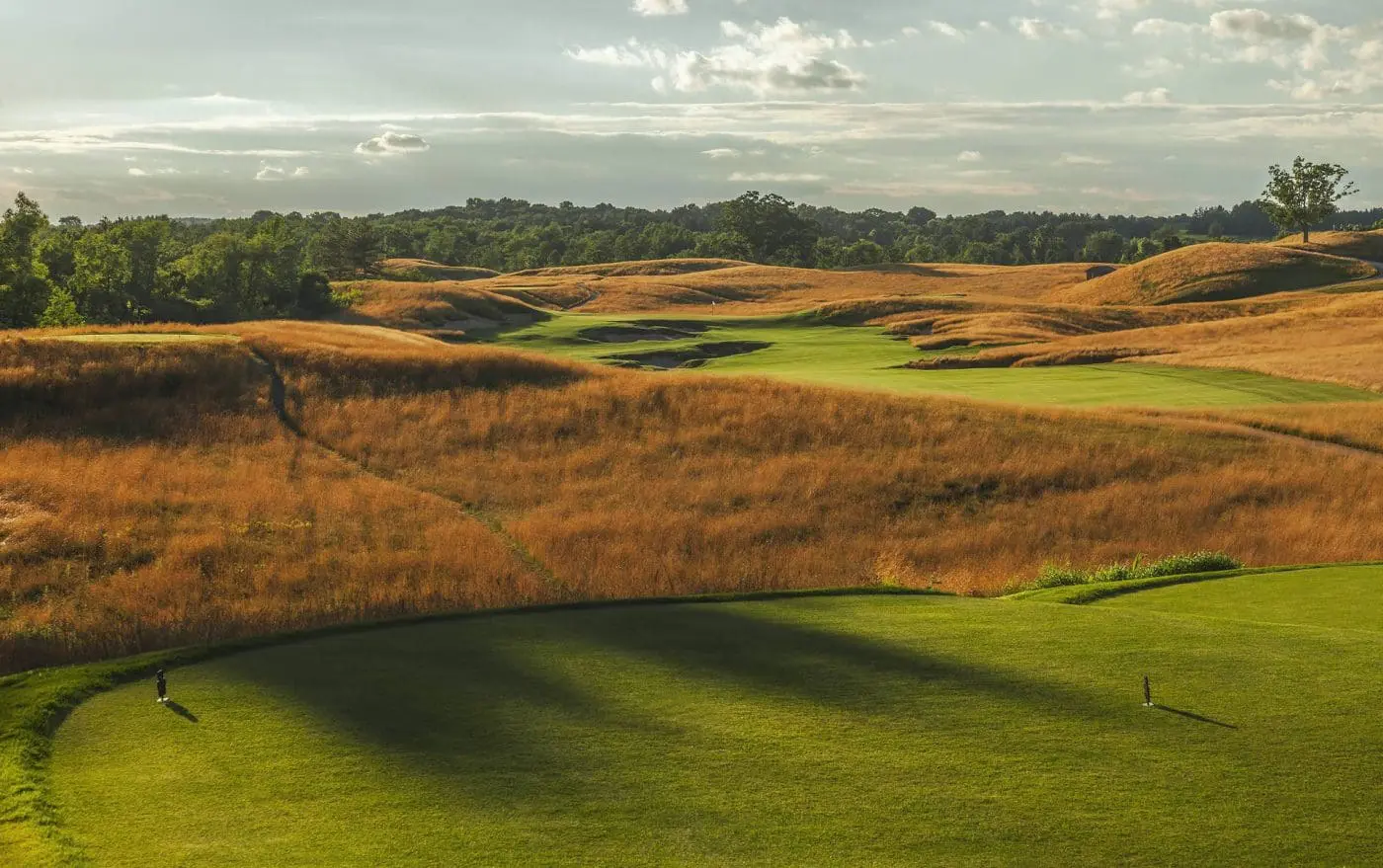
The course has the kind of width and scale that changes your posture immediately. You do not stand on the tee looking for survival. You stand there looking for the line that creates the best bounce, the best angle, or the best chance to send something screaming up a fairway.
That is why Mammoth shows up so often in Sand Valley trip talk as the pure-fun giant-fairway day. It is not because the course is brainless. It is because it appears to reward optimism more often than most big-ticket public rounds do.
It makes a Sand Valley trip more complete, not more repetitive
This matters if you are staying for multiple rounds.
The original Sand Valley review already gives you the firm-and-fast Coore-and-Crenshaw answer. That course is a little more restrained, a little more classic, and a little more “pick your route carefully.”
Mammoth Dunes sounds like the bigger-gesture complement:
- broader visuals
- broader fairways
- broader invitation to attack
That is how a resort should work.
You do not want the second headline round to feel like a remix of the first one with slightly different bunkers. You want it to change the emotional texture of the trip.
Mammoth absolutely sounds like it does that.
It may be the easiest Wisconsin splurge to defend for a mixed-handicap group
This is inference from the course reputation and the way the Wisconsin cluster on this site keeps framing it, but I think it is a strong one.
Courses with real width and real recovery space tend to work better for mixed groups because:
- the better players still get angles and speed-control questions
- the higher handicaps are not losing a sleeve by the turn
- and everybody gets to hit more golf shots and fewer apology shots
That is useful on a buddies trip.
Not every expensive course needs to feel like an entrance exam.
What the Money Looks Like Right Now
Sand Valley’s current published 2026 resort pricing puts the main 18-hole rounds in the same premium-public bucket as the original course:
- $235 from April 24 through May 20
- $325 from May 21 through October 4
- $235 from October 5 through October 18
The resort also notes that posted rates do not include tax.
So no, Mammoth Dunes is not a sneaky bargain.
But the rate sheet at least makes the decision clear:
- full-price summer if you want the headline version
- shoulder-season savings if you want a smarter version of the same trip
That shoulder-season number is the one I like most.
At $325, you need to really want the whole Sand Valley experience.
At $235, the math starts feeling much more adult for a course with this much destination pull.
Walking-Only Is Part of the Point
Sand Valley’s golf operation is walking only, and Mammoth Dunes feels like a perfect example of why that policy works.
This is a round built around:
- seeing the scale of the property
- watching the ground game unfold
- and taking in how absurdly wide some of the playing corridors feel in person
That experience gets worse in a cart.
The resort’s current caddie information also gives you the practical numbers:
- standard caddie: $100 per bag, per round, plus gratuity
- junior caddie: $60 per bag, per round, plus gratuity
- forecaddie: $40 per person for four, $50 for three, $60 for two, plus gratuity
The same Sand Valley caddie guidance says you will walk more than six miles during a round.
That is not a tiny note.
If you are going to book Mammoth Dunes, prepare for an actual walking day. If your shoes are cooked, your calves are soft, and your whole plan is based on vibes, fix that before you arrive.
How I Would Actually Approach Mammoth Dunes
1. Hit driver with intent, not recklessness
The wide-fairway reputation does not mean “swing as hard as possible and let destiny sort it out.”
It means you can be more aggressive with a plan.
I would still pick:
- the best side of the fairway for the next angle
- the part of the property that lets the ground help me
- and the miss that keeps the next shot simple
If that is not your normal setting, revisit how to play doglegs without getting greedy and how to play your first three holes without starting stupid. Width is not a license to stop thinking.
2. Treat the firm ground like a feature, not a surprise
The whole Sand Valley identity is tied to firm-and-fast golf.
That means Mammoth Dunes is probably at its best when you accept that the ground is part of the shot. I would expect:
- more runout than average
- more value in landing short of sections instead of forcing carry
- and more opportunities to use slopes for feed and release
If you only play soft parkland golf at home, brush up on how to play golf in the wind and how to play elevated greens without coming up short. Both habits matter more when the ground is part of the architecture.
3. Do not get stupid around giant greens
Big fairways usually lead to one of two bad reactions:
- golfers get overconfident off the tee
- then get lazy with approach placement because they are just happy to be in grass
Do not do that.
If Mammoth gives you giant surfaces and bold contours, section still matters. The right half of a huge green is still better than the wrong shelf of a huge green.
That is why how to play front pins without making bogey, how to play back pins better, and how to read greens like a pro remain useful even on a so-called fun course.
Fun does not mean thoughtless.
Who Should Play It
Play it if you want the most relaxed premium round in the Sand Valley orbit
That is the cleanest answer.
Mammoth sounds like the course most likely to leave you walking off the 18th thinking:
“That was absurd, and I would happily do it again tomorrow.”
Play it if your group has mixed handicaps
Wide corridors and playable recovery space tend to produce better buddies-trip golf than narrow-chute heroism.
That does not make Mammoth soft.
It makes it more usable.
Pass it only if your favorite expensive golf is the punishment-first kind
Some golfers want the hardest day available because difficulty itself is the souvenir.
Fair enough.
But that is not the only valid splurge model.
Mammoth Dunes has a real case precisely because it seems to prioritize fun that still has architectural substance.
Bottom Line
Mammoth Dunes looks absolutely worth prioritizing in 2026 if you want the Sand Valley round that leans hardest into width, freedom, and giant-fairway fun without giving up the walking-only destination-golf feel.
It has:
- a strong pure-fun identity inside the Wisconsin resort cluster
- current premium-public pricing that gets much easier to defend in shoulder season
- clear walking and caddie math
- and an obvious fit as the joy-first counterweight to Sand Valley, Erin Hills, or Whistling Straits
If your golf trips are supposed to include at least one round where the property feels huge and the swing feels liberated, Mammoth Dunes is the Wisconsin answer with the cleanest smile on its face.
Image: Birdie Report
Related Articles