Best Bulk Golf Ball Deals: Stop Overpaying for Pro V1s
You're spending way too much on golf balls. Here are the best bulk deals that deliver premium performance without the premium price.

Best places to start
Titleist Pro V1 (48 Pack, Refurbished)
We may earn a commission at no cost to you.
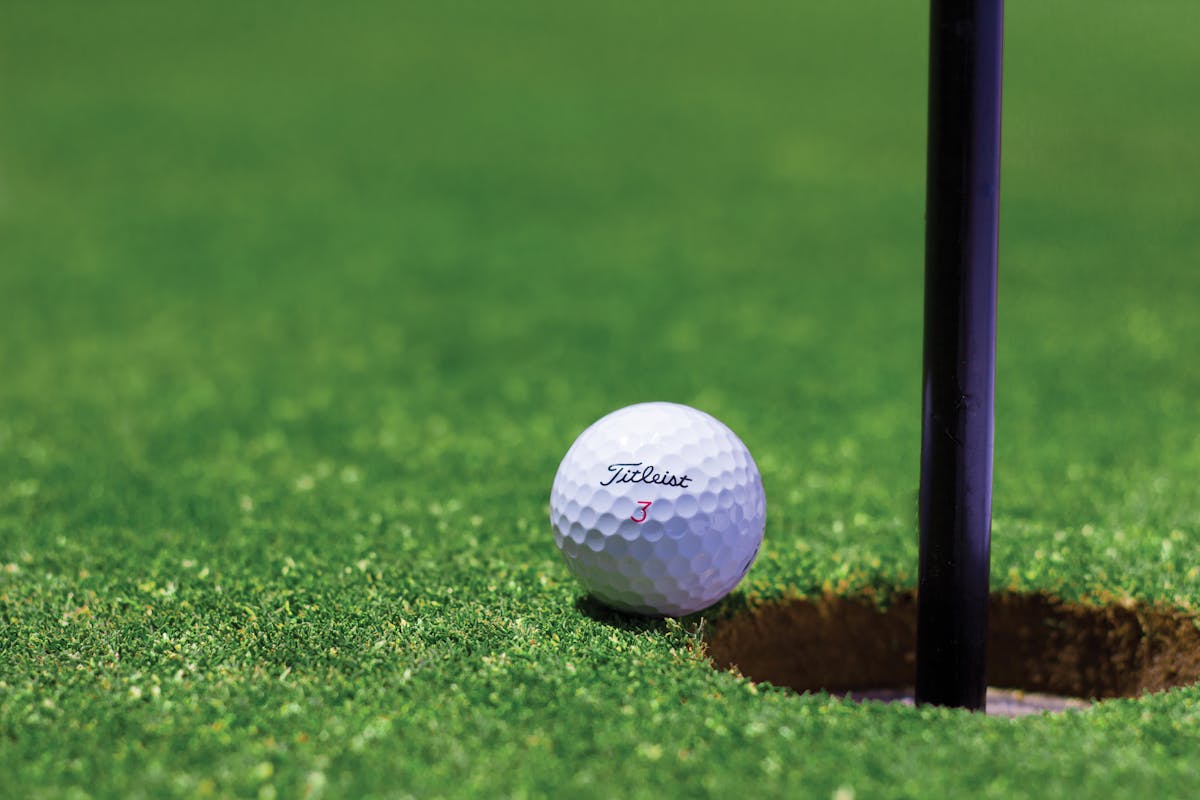
Let me do some quick math that’s going to make you uncomfortable. If you play 40 rounds a year and lose an average of 3 balls per round (be honest with yourself), that’s 120 balls. At Pro V1 prices of roughly $4.83 per ball ($57.99/dozen), you’re spending $580 a year on golf balls alone.
Five hundred and eighty dollars. On objects you routinely launch into ponds, woods, and the occasional parking lot.
There’s a better way. Let’s talk bulk deals.
If you want the checked-today version instead of the broader evergreen math, read our July 25, 2026 Vice ball-deals roundup. That piece breaks down the live Pro White ‘23, Pro Soft White ‘23, and Vice Tour pricing tiers without pretending every golfer should buy the same ball in bulk.
The Pro V1 Problem
Look, Pro V1s are great golf balls. I’m not disputing that. They feel incredible, they spin beautifully around the greens, and there’s a reason they’ve been the #1 ball on tour for two decades.
But here’s the dirty secret: the performance gap between Pro V1s and quality alternatives has shrunk to almost nothing. Modern golf ball manufacturing has gotten so good that several balls in the $25-35/dozen range perform within 1-2% of the Pro V1 on every measurable metric.
Unless you’re a scratch golfer who can genuinely feel the difference between 8,500 RPM and 8,700 RPM of wedge spin, you are literally throwing money into the water hazard.
Best Bulk Deals Right Now
1. Kirkland Signature Golf Balls — $34.99/2 Dozen ($1.46/ball)
The Kirkland Signature ball is the people’s champion. Three-piece urethane cover, 90+ compression, and performance that embarrasses balls costing three times as much.
In blind testing, most golfers — including single-digit handicappers — cannot distinguish the Kirkland from a Pro V1. The feel is slightly firmer, and the durability is marginally less, but at $1.46 per ball versus $4.83? I don’t care if it lasts two rounds instead of three.
Buy 4 packs (8 dozen) for the season: $140. That’s your entire year of balls for barely more than what two dozen Pro V1s cost ($116).
2. Vice Pro Plus (6 Dozen) — $233.94 ($3.25/ball)
Vice was one of the first direct-to-consumer golf ball companies, and the Pro Plus is their flagship. Four-piece cast urethane construction, 336 dimple pattern, and performance that’s genuinely tour-caliber.
The 6-dozen pack is where the value kicks in. At $3.25 per ball (down from $3.75 per ball for a single dozen), you’re saving about 33% versus a Pro V1 for a ball that holds its own in every category. Vice also offers a subscription model if you want to get really organized about it.
Vice sells the Pro Plus as a four-piece cast-urethane ball in the same conversation as a tour ball, at a lower bulk price. Cover wear versus a Pro V1 is a common golfer complaint about direct-to-consumer urethane. This page did not measure a distance or spin gap.
3. Snell Prime 4.0 (5 Dozen) — $175.00 ($2.92/ball)
Snell Golf was founded by Dean Snell, the guy who literally co-designed the original Pro V1 at Titleist. So when Snell says their ball competes with the Pro V1, he’s not some random startup making big claims — he’s the guy who created the thing he’s competing against.
The Prime 4.0 is a four-piece urethane ball with a tour-level compression and spin profile. At $2.92 per ball in bulk ($35/dozen), it’s arguably the best value in premium golf balls.
Snell markets the Prime as a tour-level urethane ball from the person who helped design the original Pro V1, at a lower bulk price. Treat that as the brand’s pitch. This page is not attaching a yardage or an RPM gap to it.
4. TaylorMade TP5 Prior Gen (4 Dozen) — $129.99 ($2.71/ball)
When TaylorMade releases a new TP5, the previous generation gets heavily discounted. The prior-gen TP5 is the same five-piece ball that was tour-quality last year, and it didn’t magically get worse because a new version came out.
Four dozen for $130 is a fantastic deal. The TP5’s five-layer construction gives it excellent spin separation — low spin off the driver, high spin on wedge shots. It’s a legitimate Pro V1 competitor at a significant discount.
5. Callaway Chrome Soft Prior Gen (4 Dozen) — $119.99 ($2.50/ball)
The Chrome Soft is Callaway’s answer to the Pro V1, and the prior generation in a bulk pack is arguably the best deal on this list for players who prefer a softer feel.
The Chrome Soft has a lower compression than the Pro V1, which means it feels softer at impact and generates slightly less driver spin. For players who tend to balloon their drives, this is actually a benefit. Around the greens, the graphene-infused dual core provides plenty of spin for chips and pitches.
6. Refurbished Pro V1s (48 Pack) — $79.99 ($1.67/ball)
If you absolutely must play a Pro V1 — and I get it, brand loyalty is a hell of a drug — at least buy them refurbished. Refurbished balls are lake balls and range recoveries that have been cleaned, repainted, and re-stamped.
Fair warning: quality varies. Some refurbished balls are virtually indistinguishable from new, while others have subtle imperfections that may affect performance. But at $1.67 per ball, the value proposition is hard to argue with, especially for practice rounds.
The Annual Savings Breakdown
Let’s revisit our 40-round, 120-ball scenario:
| Ball | Cost/Ball | Annual Cost | Savings vs Pro V1 |
|---|---|---|---|
| Titleist Pro V1 (new) | $4.83 | $580 | — |
| Vice Pro Plus (bulk) | $3.25 | $390 | $190 |
| Snell Prime 4.0 (bulk) | $2.92 | $350 | $230 |
| Kirkland Signature | $1.46 | $175 | $405 |
| Refurbished Pro V1 | $1.67 | $200 | $380 |
Switching from new Pro V1s to Kirkland balls saves you $405 per year. That’s a new wedge. Or 8 rounds at a decent public course. Or a really nice dinner that doesn’t involve the clubhouse grill.
”But I Can Feel the Difference”
Can you? Can you really?
A lot of golfers say they cannot tell a Pro V1, a Kirkland, and a Vice apart once the logos are hidden. That is a reason to try a sleeve of each, not a scored experiment from this site. There is no launch-monitor sheet behind this paragraph.
If you’re a +2 competing in elite amateur events, sure, play whatever gives you the most confidence. But for the other 99% of golfers? The ball you can afford to play without wincing every time it heads toward water is the right ball.
The Bottom Line
Stop overpaying for golf balls. The alternatives have caught up, the bulk pricing makes the math undeniable, and your game will not suffer. Take the savings and spend it on something that actually improves your score — like lessons, practice rounds, or a putter fitting.
Your wallet will thank you. The pond will miss you. Everybody wins.
Where to Buy
Current retailer options
Affiliate links may earn us a commission. A direct link opens one verified Amazon product page. A search link opens results. Confirm the model, seller, and current price.
Titleist Pro V1 (48 Pack, Refurbished)
Kirkland Signature Golf Balls (2 Dozen)
Vice Pro Plus Golf Balls (6 Dozen)
TaylorMade TP5 (Prior Gen, 4 Dozen)
Callaway Chrome Soft (Prior Gen, 4 Dozen)
Snell Prime 4.0 Golf Balls (5 Dozen)
Related Articles