Callaway Chrome Soft vs TaylorMade TP5: Which Premium Ball Actually Deserves Your $50?
Chrome Soft vs TP5 — two premium golf balls, both around $50/dozen. We compare spin, feel, distance, and durability to find out which one earns a spot in your bag.
 Kyle Reierson
Quick Buyer Shortlist
Best places to start
Affiliate links may earn us a commission at no extra cost to you.
Callaway Chrome Soft
Softest feel of any premium ball — noticeably plush off the putter
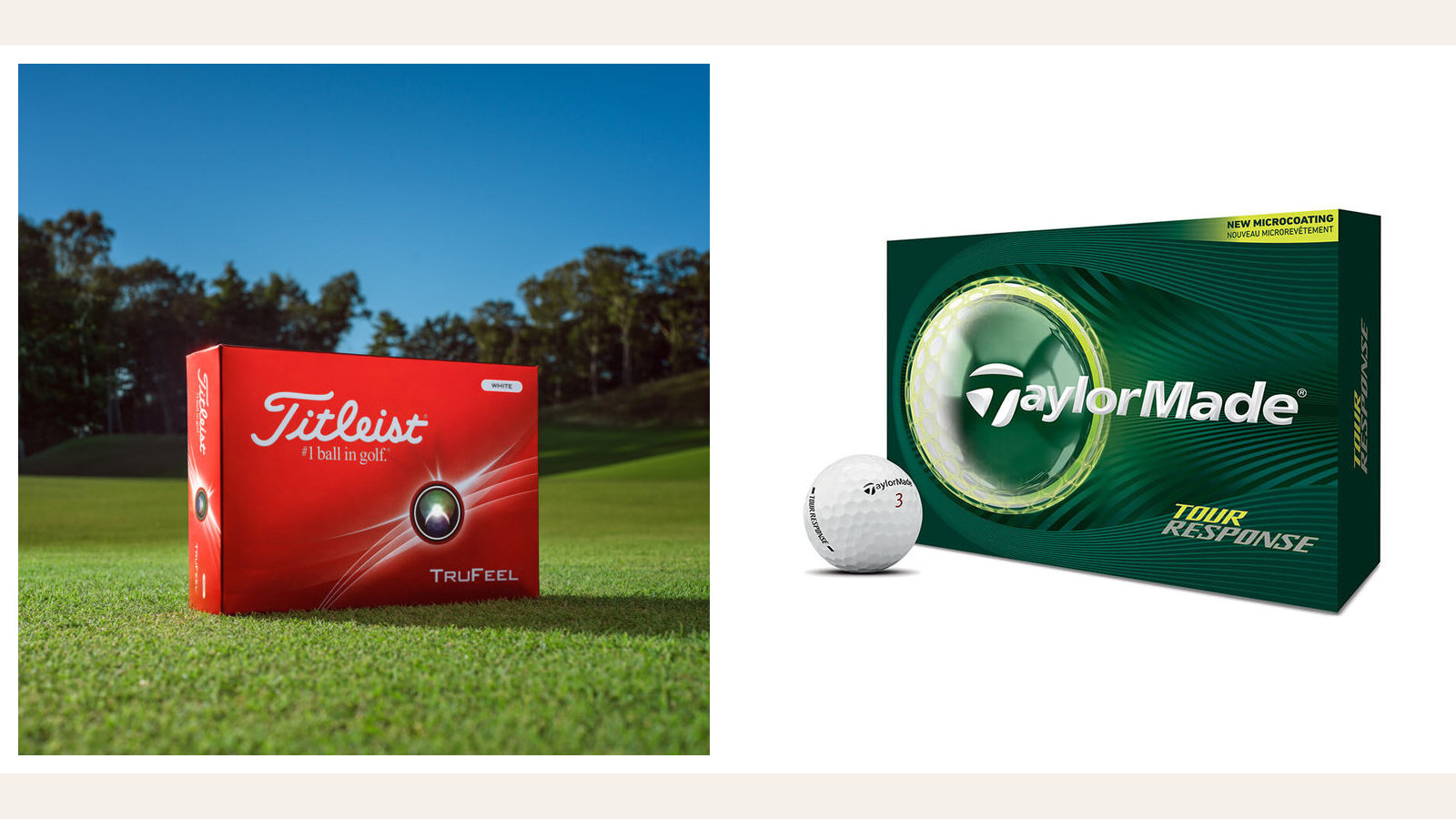
TaylorMade TP5
5-piece construction creates the best spin separation in golf
Callaway Chrome Soft vs TaylorMade TP5: Which Premium Ball Actually Deserves Your $50?
Here’s the thing about the Chrome Soft vs TP5 debate — both balls are damn good, and anyone telling you one is objectively better than the other is either lying or selling something. But they are meaningfully different, and those differences matter depending on how you play.
I’ve played both extensively, and I have opinions. Let’s get into it.
The Fundamental Difference: 4-Piece vs 5-Piece
This is where the conversation starts and where most comparisons get lazy. “More pieces = better” isn’t how this works.
Chrome Soft uses a 4-piece design with Callaway’s Hyper Elastic SoftFast Core. The engineering priority is feel and speed — they want maximum energy transfer at impact without sacrificing that buttery soft sensation off the putter face.
TP5 uses a 5-piece Tri-Fast Core construction. That extra layer creates what TaylorMade calls “speed layer technology” — progressive stiffness from the center out. The engineering priority is spin separation — meaning the ball behaves very differently on a 300-yard drive vs a 30-yard pitch shot.
In practice? The TP5 gives you slightly more wedge spin while keeping driver spin manageable. The Chrome Soft gives you a softer overall feel with lower driver spin, but the gap between driver and wedge spin is narrower.
Off the Driver: Chrome Soft Takes It
If you’re looking for distance off the tee, Chrome Soft has the edge. Not by 20 yards — we’re talking 2-4 yards for most swing speeds between 90-110 mph. But it’s consistent.
The reason is simple: Chrome Soft spins less off the driver. For the average golfer who fights a slice or a high-spinning fade, those 200-300 fewer RPMs translate to a more penetrating ball flight that rolls out further.
TP5 launches slightly higher with more spin off the driver. For elite ball-strikers who can compress the ball properly, this isn’t an issue — they want that spin for shaping shots. But for the 85-100 mph crowd, it can mean a higher, shorter drive that balloons in the wind.
Verdict: Chrome Soft for most amateur swing speeds. TP5 for 105+ mph players who want workability.
Around the Greens: TP5 Has the Edge
This is where that 5-piece construction earns its keep. On pitch shots, chips, and bunker shots, the TP5 generates noticeably more spin — roughly 300-500 RPM more on a 50-yard pitch shot.
That extra spin means the ball checks up faster and gives you more control on approach shots into firm greens. If you’re playing a course with fast, undulating greens (looking at you, Augusta), the TP5 gives you better stopping power.
Chrome Soft still spins plenty — it’s a premium urethane ball, after all. But if greenside spin is your #1 priority, the TP5 wins this category.
Verdict: TP5 for short game spin. Chrome Soft is still very good — just not as good.
Feel: Chrome Soft, and It’s Not Close
If you care about feel — and most golfers care way more than they admit — Chrome Soft is the softest premium ball on the market. Period. The compression is lower, the putter feel is plush, and full iron shots have a satisfying “thump” instead of a “click.”
TP5 feels firmer. Not hard — it’s still a premium ball — but there’s a distinct difference putting these side-by-side on the practice green. Some players love that firmer feedback. It feels more “responsive.” But most recreational golfers prefer soft.
This is completely subjective, so here’s my take as a 2-handicap: I prefer the Chrome Soft feel off the putter and the TP5 feel on iron shots. If I had to pick one, I’d go Chrome Soft because I spend more time putting than hitting 7-irons.
Durability: TP5 Wins
The TP5’s cast urethane cover is more durable than Chrome Soft’s. After 2-3 rounds, Chrome Soft balls tend to show more scuffing, especially if you’re catching them a little thin or bouncing off cart paths.
TP5 balls look nearly new after the same treatment. For golfers who play the same ball for multiple rounds (which you should — premium balls are expensive), this matters.
Verdict: TP5 lasts longer. Budget-conscious players take note.
Wind Performance: TP5
The TP5’s higher spin creates a more stable ball flight in the wind. Sounds counterintuitive — wouldn’t more spin mean more wind effect? Not with a 5-piece design. The progressive layers create a more penetrating flight that holds its line better in crosswinds.
Chrome Soft can balloon a bit in strong headwinds, especially with longer clubs. If you play links-style courses or anywhere it’s consistently windy, the TP5 handles conditions better.
Price: Dead Even
Both retail for $49.99/dozen in 2026. Neither brand discounts their premium balls much. You might find last year’s models for $5-10 less, but current-year Chrome Soft and TP5 are essentially the same price.
If price is a factor, check out the Amazon Big Spring Sale — premium balls occasionally get bundled deals.
The X/TP5x Question
Both balls have a “firmer” sibling — Chrome Soft X and TP5x. These are designed for faster swing speeds (100+ mph) and offer lower spin with a firmer feel. If you’re choosing between the standard versions and you swing over 105, try the X/x variants too. That’s a whole separate comparison.
So Who Should Play What?
Play Chrome Soft if you:
- Prioritize feel above everything
- Swing between 85-100 mph
- Want lower driver spin for straighter tee shots
- Don’t love the “clicky” feel of firmer balls
- Play most of your golf in calm conditions
Play TP5 if you:
- Want maximum greenside spin and control
- Swing 100+ mph consistently
- Play in windy conditions regularly
- Want a ball that lasts multiple rounds
- Prefer a firmer, more responsive feel
My Pick
Gun to my head? TP5 — but only by a hair. The spin separation is real, the durability is better, and as a low-handicapper I value short game control over driver distance.
But here’s the honest truth: you’d shoot the same score with either ball. The difference between these two is maybe half a stroke per round, tops. Both are elite. Both are worth the $50.
If you’re currently playing a $25/dozen ball and agonizing over Chrome Soft vs TP5, stop. Buy either one. The jump from a mid-tier ball to any premium urethane ball is worth 2-3 strokes. The jump between these two premium balls? It’s a rounding error.
Now go play.
Looking for a budget alternative? Check out our Kirkland vs Pro V1 comparison — Costco’s $1.46 ball is shockingly competitive.
Weekly Golf Newsletter
Equipment reviews, tips to lower your scores, and exclusive deals delivered every Tuesday.
No spam. Unsubscribe anytime. 100% free.
Related Articles